Soft washing and pressure washing are two different methods, and using the wrong one is how exteriors get damaged. Soft washing uses low pressure plus a cleaning solution; pressure washing uses high-pressure water with little or no solution. The short version for a Gainesville home: soft wash the siding, roof, deck, and fence, and pressure wash the concrete. Here is why the line falls where it does, and how to tell which surface needs which.
The Difference in One Sentence
Soft washing cleans with chemistry and a gentle rinse, while pressure washing cleans with force. A soft wash applies a biodegradable solution that kills mildew and algae at the root, waits for it to work, then rinses at low pressure. Pressure washing drives water at high PSI to blast grime off hard surfaces. The solution is what makes soft washing last; the force is what makes pressure washing effective on concrete and dangerous on everything softer.
When to Soft Wash
Soft washing is the method for any surface that high pressure would damage. On a Gainesville home that means:
- Vinyl siding. High pressure forces water behind the panels into the wall cavity, where it feeds mold. Most Gainesville homes were built in the 2000s with vinyl siding, so soft washing is the standard here.
- Asphalt shingle roofs. Pressure strips the protective granules off shingles, and they do not grow back. The black streaks are algae, removed with a no-pressure soft wash.
- Wood and composite decks and fences. High pressure lifts and splinters wood grain. A low-pressure wash with a wood-safe solution cleans without gouging.
- Stucco and painted surfaces. Force chips and erodes these finishes; a solution lifts the growth instead.
If you are dealing with green or black growth on siding, a roof, or a deck in Gainesville, that is a soft-wash job. Call 123-456-7890 to reach a soft washing provider, or read more about house washing.
When to Pressure Wash
Pressure washing is the right method for hard, non-porous surfaces that can take force without damage. That means concrete and masonry:
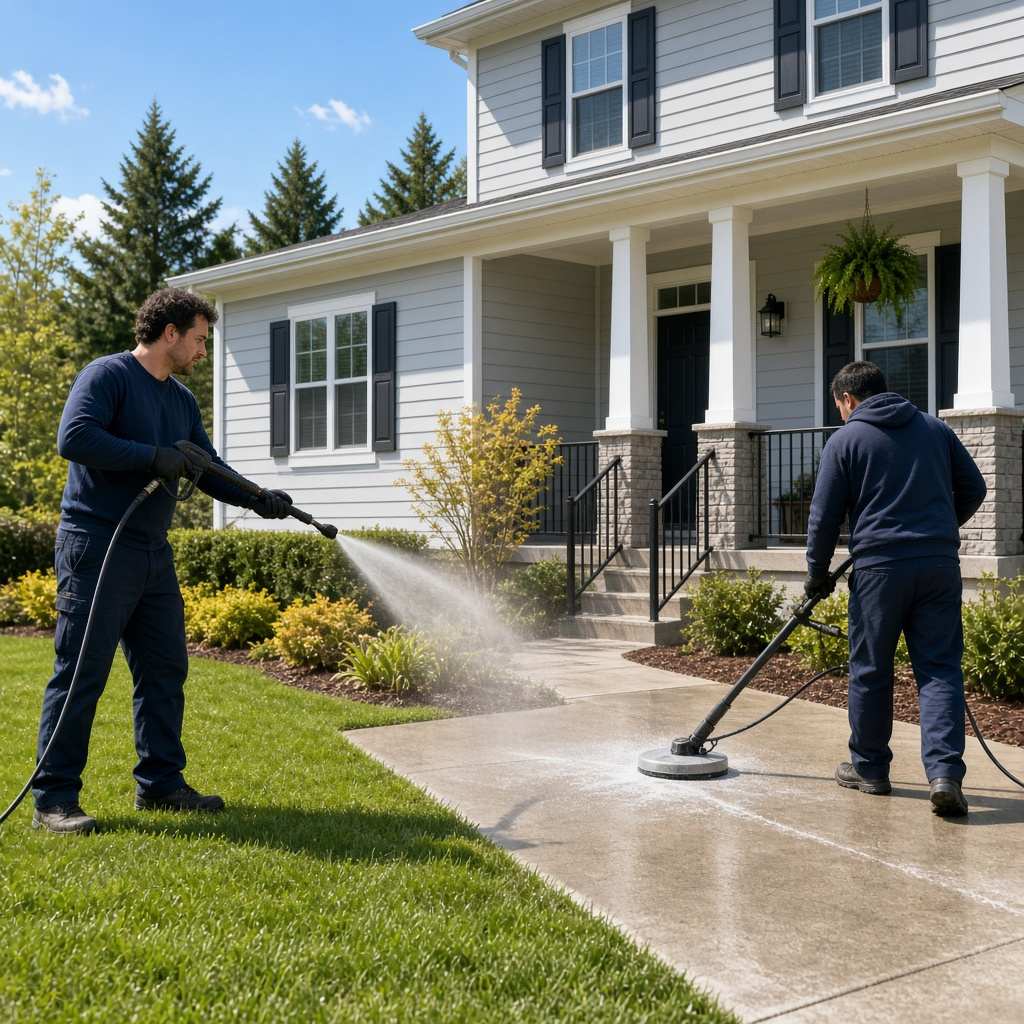
- Concrete driveways, walkways, and patios. A flat surface cleaner at full pressure lifts algae, oil, and freeze-thaw grime evenly.
- Brick and block. Solid masonry handles pressure, though mortar joints need a controlled approach.
- Dumpster pads and commercial flatwork. High-traffic concrete cleans fastest with pressure.
Even on concrete, a cleaning solution helps — it kills the algae so the staining does not return in a few months. Pressure removes the layer; the solution removes the cause.
Why the Method Matters More in Gainesville
Gainesville’s climate makes the method choice consequential because the growth is biological, not just dirt. The 1991–2020 normals at Washington Dulles put annual rainfall at 43.24 inches and the mean temperature at 55.7 degrees — warm and wet enough to grow algae and mildew on any damp surface. A plain high-pressure rinse blasts off the visible green but leaves the roots, so it returns within months. A soft wash with solution kills the organism and stays clean for a year or more.
The housing stock raises the stakes. Homes built in the 2000–2009 wave that dominates Gainesville now have 15 to 25 years of growth on siding, roofs, and decks — all surfaces that need soft washing, not pressure. Reaching for a pressure wand on those surfaces is the most common way homeowners and inexperienced cleaners cause damage.
How to Tell Which You Need
Look at the surface, not the stain. If the surface is hard and flat — concrete, brick, pavers — it can be pressure washed. If it is siding, a roof, wood, or a painted or coated surface, it needs soft washing. When a single visit covers a whole house, it is usually both: soft wash the house, roof, and deck, and pressure wash the driveway and walkways. A provider who uses one pressure setting for everything is the warning sign.
If you want the right method matched to each surface on your Gainesville home, call 123-456-7890 to reach a pressure washing provider.